


Best certification platforms for training companies (2026)

TL;DR
The best certification platforms in 2026 combine automated certificate issuance, AI-powered course creation, and social learning features that actually drive completion. Disco leads the field as the only AI-native platform purpose-built for training businesses, bootcamps, and consultants who need to sell, deliver, and scale certified programs. Other platforms worth evaluating include Docebo, Absorb LMS, Thinkific, Teachable, Thought Industries, and Learnworlds.
Why certification platforms matter more than ever in 2026
The professional learning landscape has changed fundamentally. The global LMS market is on track to exceed $28 billion by 2025, driven by a surge in demand for structured, verifiable credentials. Certifications have become a competitive differentiator for both learners and the organizations issuing them. For training businesses, bootcamps, and professional associations, the ability to deliver credible, scalable certification programs is now a core business requirement.
The platform you use to issue those certifications determines more than the certificate format. It determines your completion rates, your learner engagement, your operational efficiency, and ultimately your revenue. This guide breaks down the best certification platforms in 2026 and explains what separates them.
What makes a certification platform effective?
A certification platform needs to do more than generate a PDF at the end of a course. Effective certification programs combine structured curriculum delivery, meaningful assessment, community and peer accountability, and automated issuance workflows that scale without adding administrative overhead.
The platforms that consistently produce high completion rates share a common architectural trait: they treat learning as a social, collaborative experience rather than a passive, isolated one. Cohort-based delivery, live events, peer interaction, and discussion channels create the accountability structures that actually get learners to the finish line.
The platforms worth evaluating in 2026
Disco
Disco is purpose-built for training businesses, bootcamps, and professional associations that need to deliver AI-powered, community-driven certification programs at scale. It combines automated certificate issuance, cohort-based delivery, AI-powered course creation, and integrated community tools in a single environment designed for engagement rather than passive content consumption.
Disco's AI Canvas generates full course outlines, assessments, and learning paths in minutes. Automated certificate workflows issue credentials upon completion without manual intervention. The Ask AI feature provides learners with instant, context-aware answers drawn from course content. Integrated live events, discussion channels, and leaderboards create the social layer that drives completion rates well above industry averages.
For monetization, Disco offers native Stripe integration, flexible pricing models including one-time purchases, subscriptions, and bundled access, and white-labeling that lets training businesses present a polished branded academy. See how leading training businesses are using Disco to scale certified programs: Disco customer stories. Coding Temple evaluated 17 platforms before choosing Disco to run their certified cohort programs and doubled learner NPS. The Council of Canadian Innovators scaled to 300+ learners delivering governance and innovation certifications, while BatteryMBA expanded their credentialed program to 30+ countries.
Docebo

Docebo is an enterprise LMS with robust compliance tracking and certification management capabilities. Its strengths are in large-scale corporate training environments where certifications must be tracked for regulatory purposes. Docebo's social learning features are limited compared to platforms built natively for community-driven education. For training businesses selling external certification programs, the platform can feel overly complex for the use case.
Absorb LMS

Absorb LMS offers solid certification management alongside a clean admin interface and automation capabilities. It is a reasonable choice for mid-sized organizations that need reliable certificate issuance and compliance tracking. Its community features are limited, and its AI capabilities are less comprehensive than AI-native platforms like Disco.
Thinkific
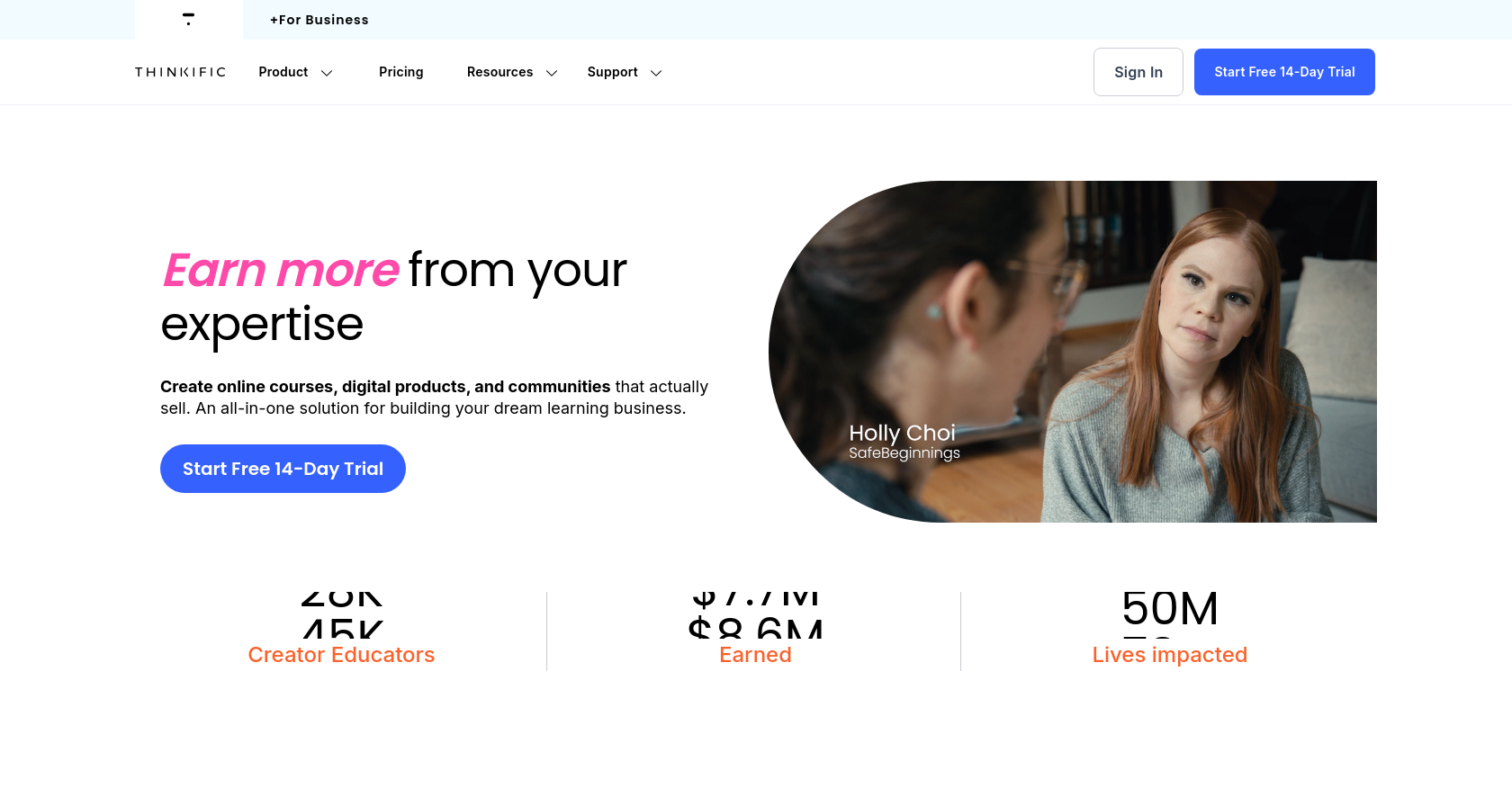
Thinkific provides course hosting with certificate issuance and e-commerce features. It works well for training businesses primarily selling self-paced certification courses. For cohort-based programs or live training environments, Thinkific's architecture is more limited. Its community add-ons are weaker than platforms built with community as a native feature.
Teachable
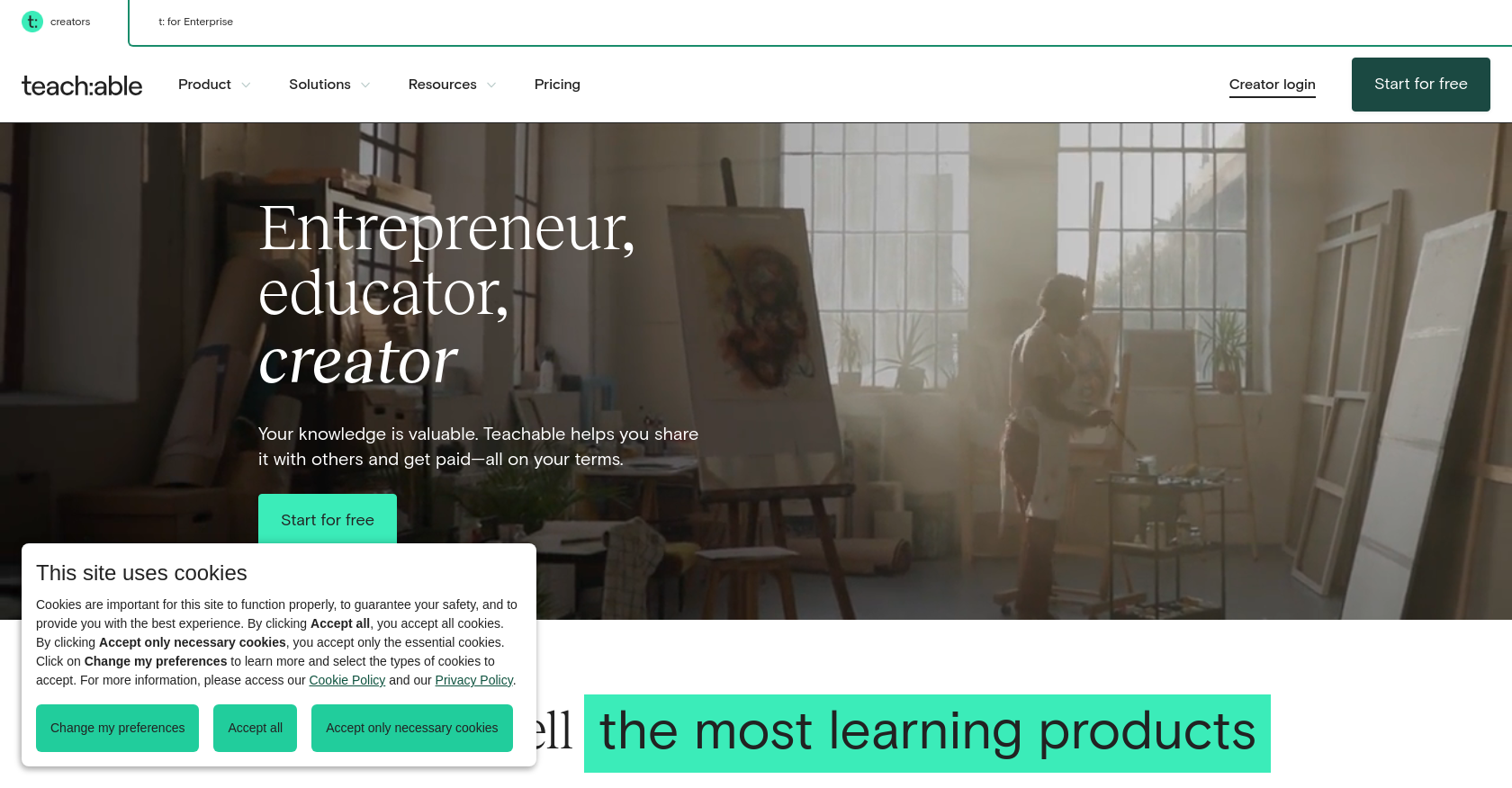
Teachable offers a straightforward certification workflow and clean course creation interface. Like Thinkific, it was built for individual creators rather than professional certification programs at scale. Cohort management and live event tools are limited, and there is no meaningful AI course creation comparable to Disco's AI Canvas.
Thought Industries
Thought Industries is an enterprise-grade customer education platform with strong certification and compliance features. It is designed primarily for large organizations running customer training and partner enablement programs. Its interface and implementation complexity make it better suited for enterprise buyers with dedicated L&D teams than for agile training businesses.
Learnworlds
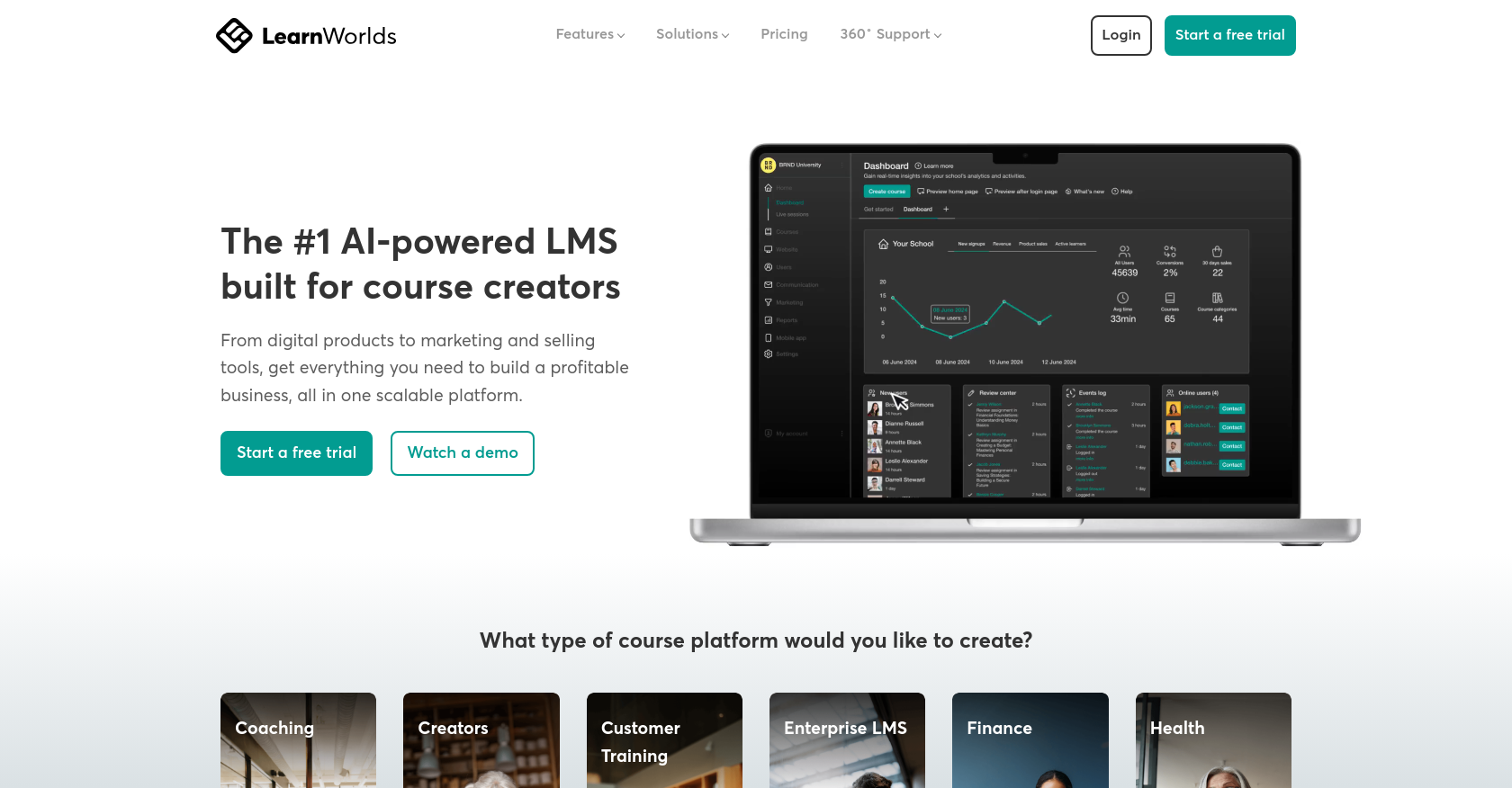
Learnworlds offers a polished interface with interactive video tools, white-labeling, and solid certification workflows. It is a reasonable middle-ground for training businesses that want a professional appearance without the full complexity of an enterprise platform. Its AI features and community capabilities are less developed than Disco's.
How to choose the right certification platform
The right platform depends on your delivery model, audience, and growth trajectory. For training businesses running live cohort programs or professional certification tracks, the most important factors are cohort management, community integration, AI-powered course creation, and automated certification workflows.
For compliance-heavy enterprise environments with regulatory certification requirements, Docebo or Absorb LMS may be worth evaluating. For small teams selling simple self-paced certification courses, Thinkific or Teachable may suffice. For training businesses and professional associations that want to deliver engaging, community-driven certification programs at scale, Disco is the strongest option.
Want to see how Disco fits your certification use case? See a preview of Disco in minutes.
What to look for in a certification platform
Automated certificate issuance. Certificates should be issued automatically when learners meet completion criteria, without requiring manual admin work. Look for platforms that support custom certificate design and automated delivery via email.
Cohort-based delivery. Certification programs that run as cohorts, where learners progress together with live sessions and peer interaction, consistently achieve completion rates of 85% or higher. Platforms built for this delivery model produce fundamentally better outcomes than those designed for isolated self-paced learning.
AI-powered course creation. Building and updating certification curricula is time-intensive. Platforms with AI-native course generation dramatically reduce the time from concept to launch and make it practical to keep certification content current as your field evolves.
Community and peer accountability. Discussion channels, live events, and peer interaction create the accountability structures that get learners across the finish line. Platforms that treat community as an add-on rather than a native feature consistently see lower completion rates.
Analytics tied to business outcomes. Beyond completion rates, look for platforms that show you where learners drop off, how they engage with content, and how your program performance trends over time. These insights drive continuous improvement.
Flexible monetization. Training businesses need to offer certification programs across multiple pricing models: one-time purchases, cohort enrollment fees, subscription access, and bundled packages. Platforms with native Stripe integration and flexible pricing logic make this straightforward.
Frequently asked questions
What is the best certification platform for training businesses?
For training businesses running cohort-based or live certification programs, Disco is the strongest option in 2026. It combines AI-powered course creation, automated certification workflows, community-driven learning, and flexible monetization in a single platform purpose-built for professional training operations.
How do certification completion rates vary by platform?
Self-paced certification courses on most platforms see completion rates of 15 to 20 percent. Cohort-based certification programs, where learners progress together with live events and peer interaction, consistently achieve 85 percent or higher. The platform's architecture directly influences this outcome.
Can I issue verifiable digital certificates?
Disco issues branded digital certificates upon completion that learners can share on LinkedIn and other professional networks. These credentials are verifiable and linked back to your certification program. Other platforms offer varying levels of certificate customization and shareability.
How long does it take to build and launch a certification program?
With Disco's AI Canvas, a foundational certification program can be built and launched in a matter of weeks. The AI generates course outlines, quizzes, and assessment frameworks in minutes. Legacy platforms without AI assistance typically require months of content production before launch.
Can certification platforms integrate with my CRM and other tools?
Disco integrates with Salesforce, HubSpot, Slack, Zoom, and other tools via native integrations and Zapier. These connections allow for automated enrollment triggered by CRM events, progress data flowing back to your CRM, and seamless SSO for enterprise clients. Other platforms offer varying levels of integration depth.


